



Battery-electric trucks: Answers to common questions

Tailor-made solutions, unmatched flexibility and rapid integration of new technology are at the core of Scania’s modular system. Refined over decades, Scania’s well-established toolbox now plays a central role in the transition to battery-electric transport.
Tailor-made solutions, unmatched flexibility and rapid integration of new technology are at the core of Scania’s modular system. Refined over decades, Scania’s well-established toolbox now plays a central role in the transition to battery-electric transport.
When designing an optimal truck, the goal is always the same: to match the vehicle as closely as possible to the transport tasks it will perform.
There are two fundamentally different ways to design a truck that is precisely tailored to a customer’s operation.
One approach is to design every component from scratch and place it specifically for one individual vehicle specification. While this can deliver a perfect technical match, it would result in high costs and limited serviceability.
The alternative is a modular toolbox approach. This means developing a comprehensive construction system where standardised components fit together in many different combinations. By using as many shared components as possible, a wide range of customer-specific variants can be created. The result is a truck that is cost-efficient, flexible and still tailor-made for its application.
Around 50 years ago, Scania chose the modular path. That decision has proven successful for both the company and its customers, and it continues to be the foundation of Scania’s product strategy today.
As electrification accelerates, Scania’s modular toolbox is evolving to support battery-electric vehicles. Many components, such as frames, cabs and axles, are shared between internal combustion engine trucks and battery-electric trucks. This commonality has enabled Scania to develop electric trucks faster and more efficiently than starting from a completely new platform.
The core principle remains unchanged: build optimal vehicles using as few components as possible. Whether the powertrain is electric or combustion-based, modularity allows Scania to deliver the right solution for each application.

“Thanks to Scania’s extensive experience in building internal combustion engine vehicles using our modular toolbox, we were able to develop and design a battery electric truck quicker than if we had started from scratch,” he says.
“The basic idea – to construct optimal vehicles from as few parts as possible – is the same whether we’re building battery electric trucks or combustion engine powertrains,” Holmstrand adds.
While many components are shared, battery-electric trucks also introduce new modules to the construction kit. Take a closer look at some of the most important ones.
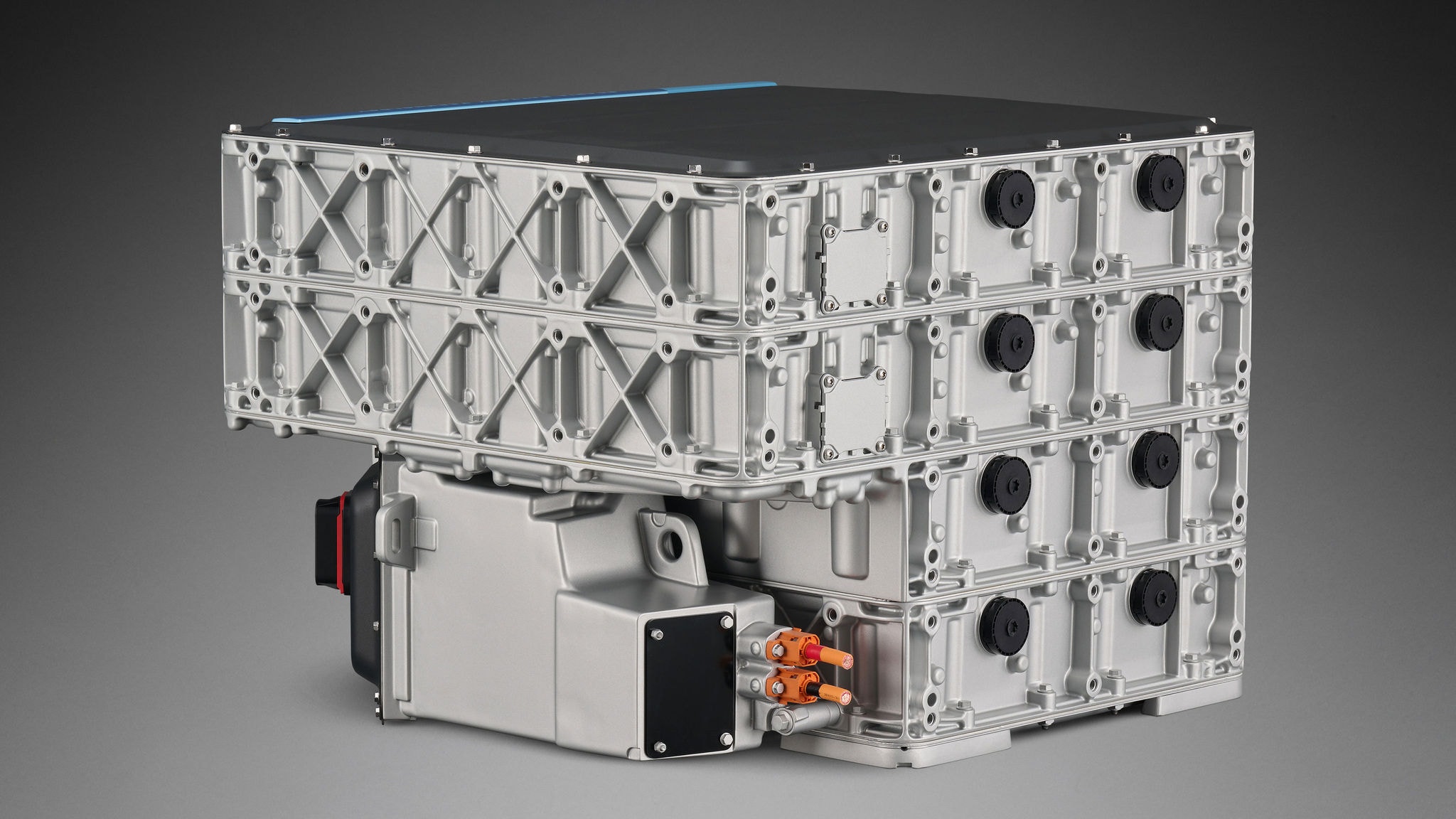
Thanks to the modular approach, Scania’s battery packs can be installed in multiple positions on the vehicle to best suit different applications, including frame-mounted and under-the-cab solutions.
A wide range of installed capacities is available, and the battery offering will continue to expand over time as new configurations are introduced. This modular flexibility ensures that customers can always select a battery setup that balances range, payload and energy efficiency based on their specific operational needs.
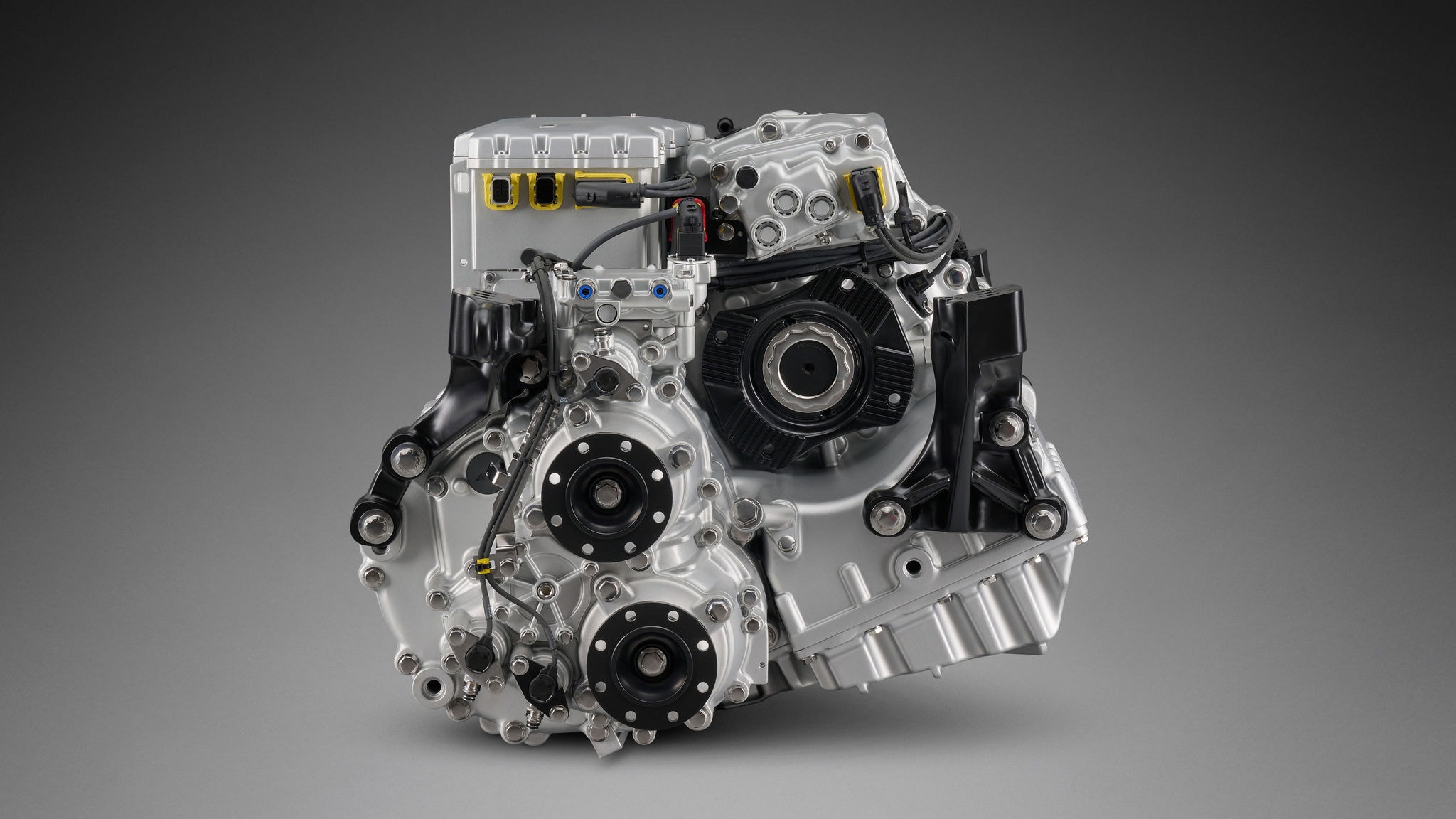
The electric machine is a crucial building block in a battery-electric truck. Scania currently offers several electric machines, delivering continuous power outputs ranging from 210 to 450 kW.
Unlike a combustion engine, which is typically mounted at the front of the truck, the electric machine is placed centrally in the chassis, slightly further back. This placement supports efficient power delivery and optimal weight distribution.
In parallel, Scania is developing an additional solution where the electric machine is integrated directly into the axle. This concept combines the electric motor, power electronics and gearbox into a single unit that drives the wheels directly. Rather than replacing the current electric powertrain architecture, this solution will complement it and add further flexibility for different applications.
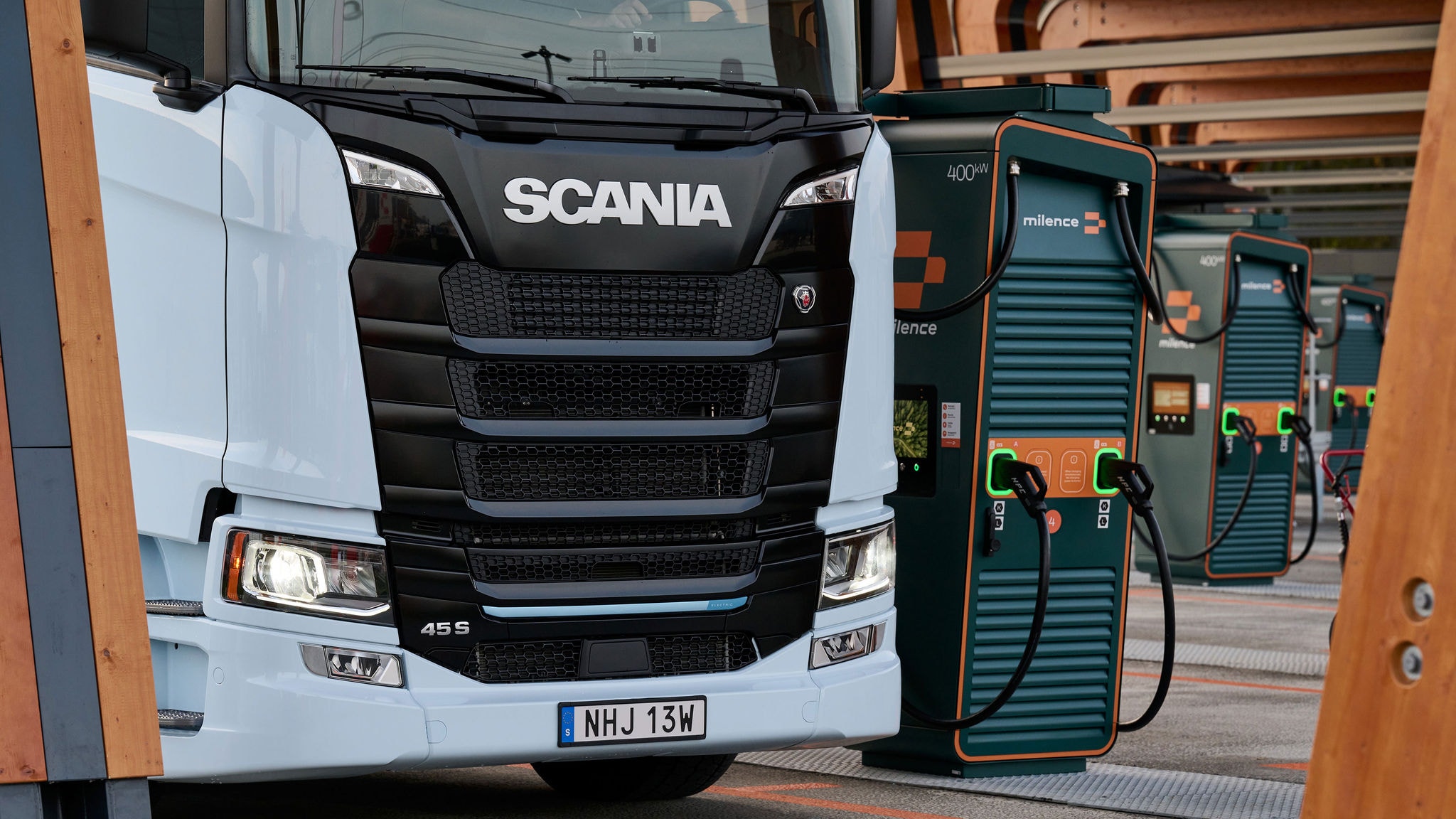
Scania battery-electric trucks use CCS2 connectors, supporting charging power of up to 375 kW. Thanks to the modular design and use of common components, additional charging connectors can be fitted on both sides of the vehicle or at the rear, improving flexibility for depot charging.
Scania also specifies a connector module for the Megawatt Charging System (MCS). This enables ultra-fast charging for long-haul and regional operations with high energy demand, significantly reducing downtime when vehicles need to return to service quickly.
Depending on the application, battery-electric trucks may be equipped with two charging interfaces: CCS2 for depot and destination charging, and MCS for high-power en-route charging.
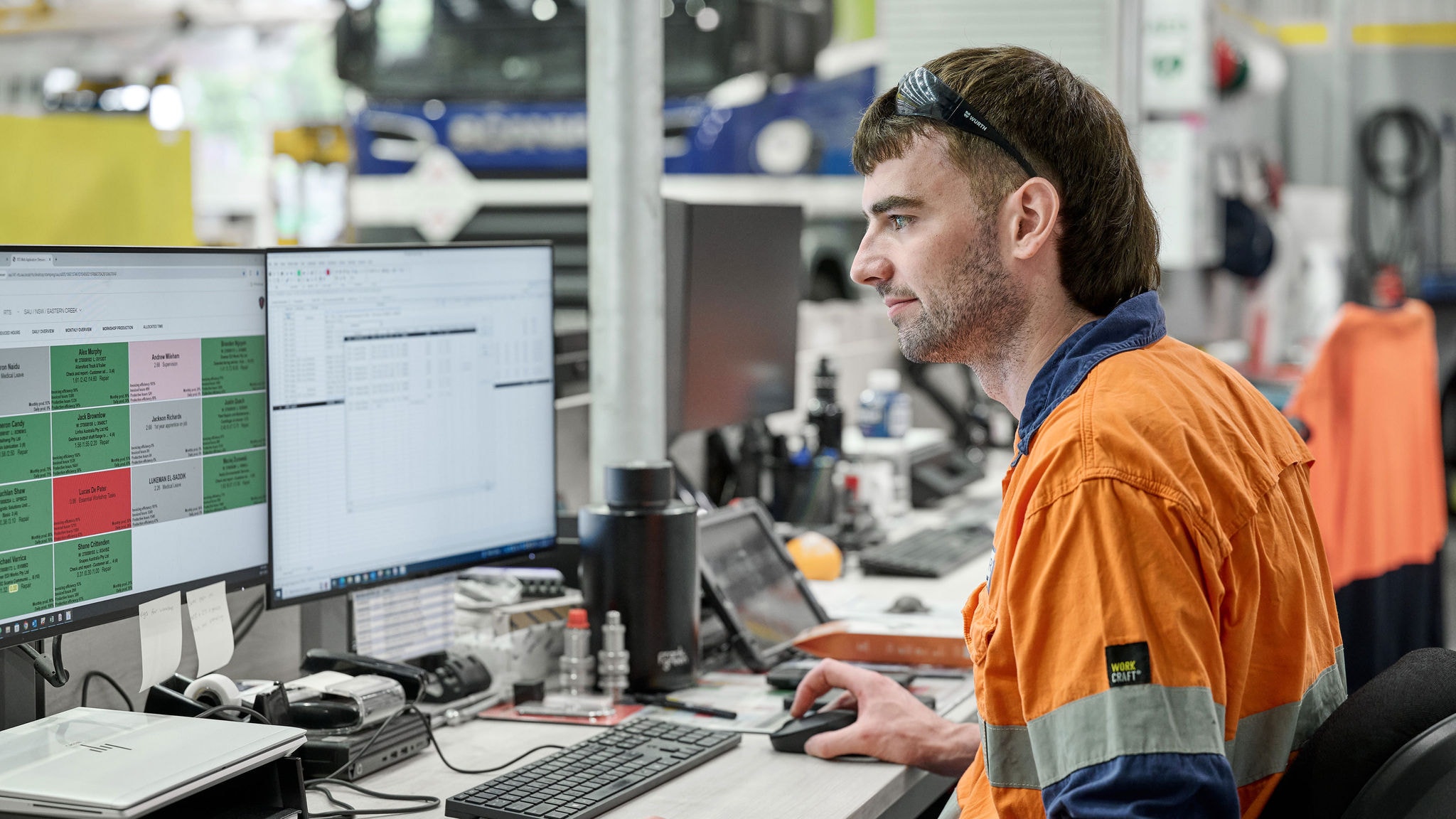
Scania’s modular philosophy also applies to services and software. The electric powertrain is managed by the vehicle’s electronic control unit and the battery management system, which continuously monitor and optimise parameters such as battery temperature, state of charge and power distribution.
This modular software architecture supports efficient, safe operation and enables continuous updates and improvements over the vehicle’s lifetime.
As electrification continues to evolve, Scania’s modular approach ensures that customers receive solutions that match their transport challenges, both today and in the future. The ability to combine proven components with new technology allows Scania to deliver smart, resource-efficient and tailor-made vehicles at scale.
For Scania engineers, modularity is not just a design principle, it is part of the company’s DNA.

We help you find the right charging solution for your specific need.