Bus passengers

Bus and coach safety systems and ADAS

For Scania, putting people first and meeting their transport needs in the safest way possible is a key focus. And this applies to drivers, passengers as well as surrounding road users. To prevent accidents and create safer roads, Scania buses and coaches are engineered with safety as a core principle.

A holistic safety portfolio

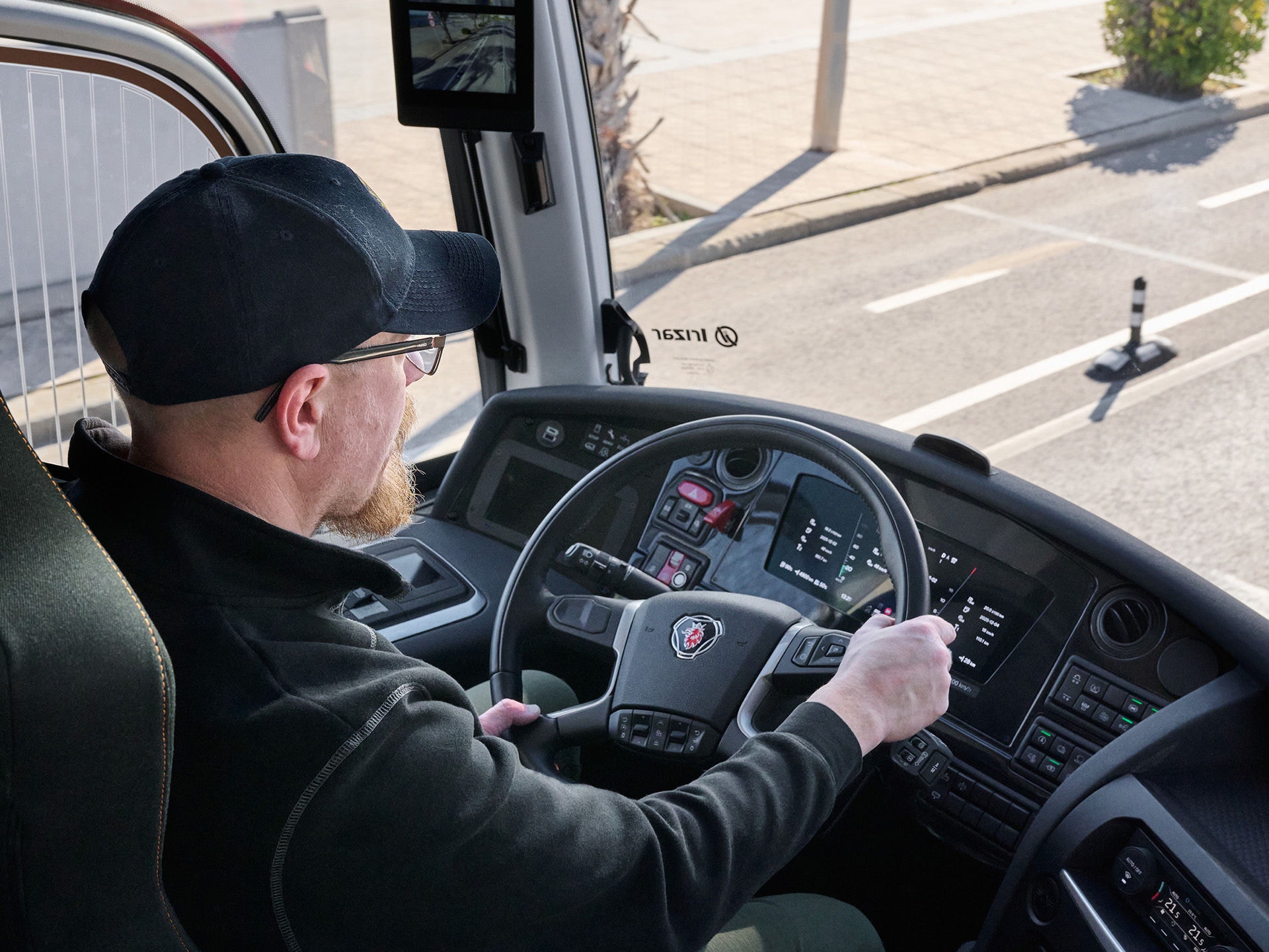
To minimise the risk of traffic incidents, we leverage built-in state-of-the-art safety systems and features, such as our advanced driver assistance systems (ADAS) which assist the driver by increasing awareness of surrounding road users and even helping to control the vehicle when needed. The vehicle’s sensor platform combines short range radar, distance sensors and camera technologies to support drivers. Improved road user detection, collision warnings, tyre pressure monitoring, alcolock preparation and many more features and functionalities ensure compliance with both today’s and tomorrow’s safety regulations.

Scania Zone for smart speed control

Safe driving practices can be further assisted through the use of Scania Zone. A service that offers a range of functions, including helping to ensure compliance with speed limits, for instance in bus depots and around schools.

  • Managed through the My Scania Fleet Management tool.
  • Configurable between fully automatic adjustment or with driver notifications through the vehicle dashboard.
  • Can automatically switch hybrid buses and coaches into fully electric operation.

Minimising potential damage

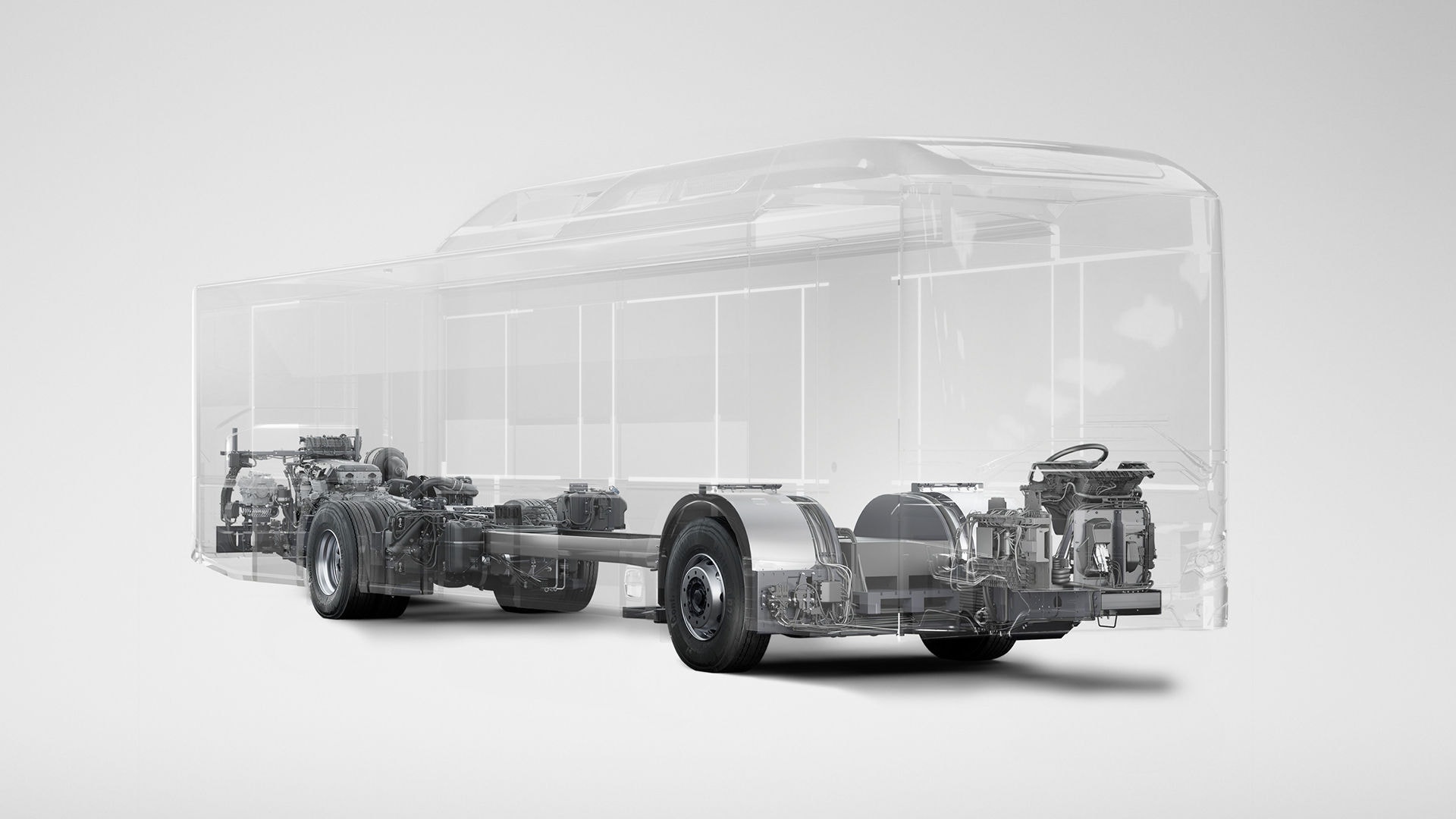
Although Scania is striving to eliminate accidents altogether, they can still happen. Therefore, the vehicle itself, right down to its individual components, needs to be designed in a way that protects the driver, passengers and other road users. While dependent on the specification of the complete vehicle, all Scania buses and coaches have been prepared to help avoid major deformations and protect the driver in a front impact collision, and to prevent, for example, passenger cars from sliding under the vehicle in the front and rear – with similar preparations done to protect both passengers and batteries in a side impact collision. Using reinforced, tested and verified chassis components, our buses and coaches are built to be as safe as possible. For everyone.

Keeping batteries safe in any event

For our batteries, we leverage many layers of safety technology. For example with pure physical means such as impact protection for the whole packs, and individual fuses in every single battery cell. But also with continuous monitoring of every aspect of operation and charging by the Battery Management System (BMS) – providing the ability to transition the vehicle and battery into a safe state.

Learn more about our ADAS features

Our vehicles are built with a safety portfolio with close to a hundred different safety features. Explore examples of some of our ADAS functions below.

More ADAS and safety features

Lane Departure Warning with Active Steering (LDWAS)

Detects unintended lane departures, alerts the driver, and can steer the vehicle back to the center of the lane.

  • Monitors road markings, extending the regular LDW function.
  • In the event of the vehicle unintentionally drifting, LDW first alerts the driver.
  • If needed, LDWAS engages active steering to bring the bus or coach safely back before disengaging.
  • Activated through the instrument cluster; the function requires clear road markings and is active between speeds of 60 and 120 km/h.

Lane Change Collision Prevention (LCCP)

Helps the driver avoid collisions during lane changes by actively steering back if needed.

  • During a lane change, if the radar detects an occupied lane, the Blind Spot Warning function provides visual and acoustic alerts.
  • If the driver does not react, the Lane Change Collision Prevention function actively steers the vehicle back into its lane.
  • Requires clear road markings and is active between speeds of 60 and 120 km/h.
  • Activated through the instrument cluster.

Speed Sign Information (SSI)

Informs the driver of the applicable speed limit and warns if it is exceeded.

  • Designed to help the driver to not exceed the speed limit, using cameras and GPS linked map databases with two warning levels.
  • Level one: Informs the driver via a flashing display that the speed limit is being exceeded.
  • Level two: An acoustic warning signal that sounds if the speed limit is exceeded for more than three seconds.
  • As soon as the driver adjusts the speed limit, the signal disappears. Once the speed limit changes again, a shorter acoustic notification sounds.

Advanced Emergency Brake (AEB)

Uses camera and radar to prevent or mitigate the impact of a collision with vehicles, pedestrians or cyclists ahead.


  • Upon detecting a potential collision, AEB proceeds by warning
  • If the risk for a collision remains, the system begins to partially brake
  • As a final step, if the risk persists, AEB applies full braking

Other safety features include functionality such as:

  • Driver Attention Support
  • Advanced Driver Distraction Warning
  • Adaptive Cruise Control
  • Tyre Pressure Monitoring
  • Hill Hold
  • Downhill Speed Control
  • Alcolock Preparation
  • Rain Sensor
  • Blind Spot Warning
  • Electro-Pneumatic Parking Brake