Production facilities

Supply chain decarbonisation

Together with our suppliers we have outlined an ambitious industry-leading strategy to reduce the largest carbon emissions sources from the most common production materials and batteries.

Four emission hotspots

Through a life cycle analysis on our European production-related supply chain, we have identified four emission hotspots:

Batteries

Steel

Aluminium

Cast iron

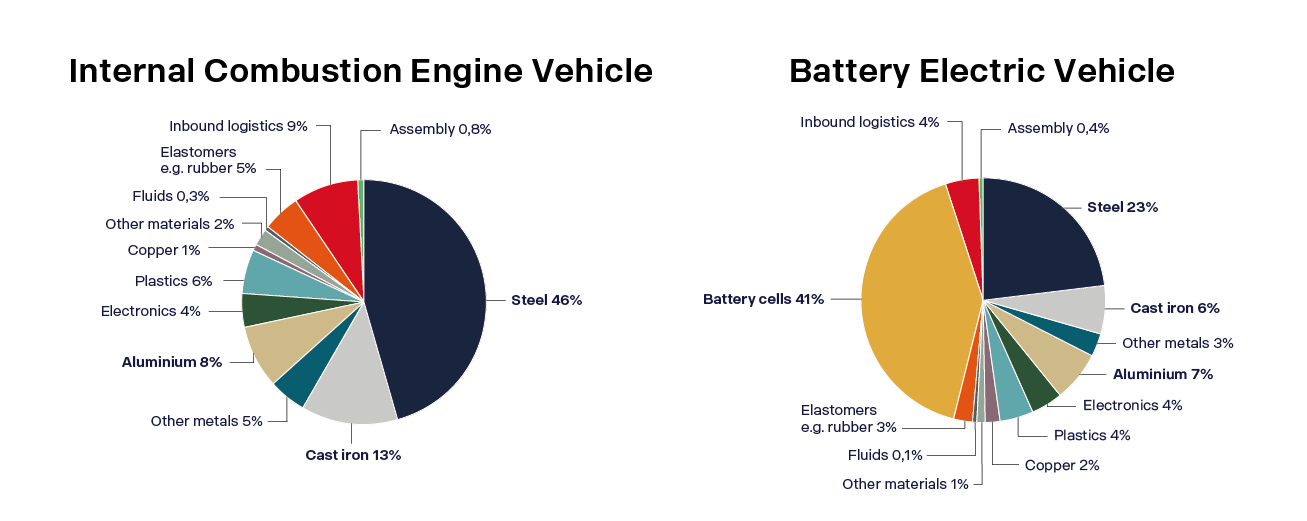
these together constitute approximately 80 percent of carbon emissions arising from production materials. In electric vehicles, batteries can account for half of sourcing emissions whereas in combustion engine vehicles, steel has the greatest carbon footprint. These four hotspots are therefore the focus of Scania’s supply chain decarbonisation strategy.

GHG emissions from different material categories in % of total emissions from production phase. Valid for distribution trucks only.

Source: Scania LCA, 2021

Our 2030 ambitions

In 2022, across our European operations, Scania set an ambition to purchase 100 percent green steel, batteries, aluminum and cast iron by 2030. Green is defined as the reduction of the main emission source through use of new technologies, fossil free electricity and/or recycled materials. In batteries, for example, access to green energy in production is crucial. In flat steel production, replacing coal with green hydrogen is key. 


Scania is consistently reviewing our ambitions based on scientific evidence, market development, technological advancements and availability of materials. We are conscious that supply chain readiness for green batteries, components and materials remains a critical dependency for realising our ambition.


This is just the beginning of our supply chain decarbonisation journey. Together with our suppliers we are working to extend the scope of our efforts so that our strategy will eventually cover our entire supply chain.