Powerful solutions for cleaner transport

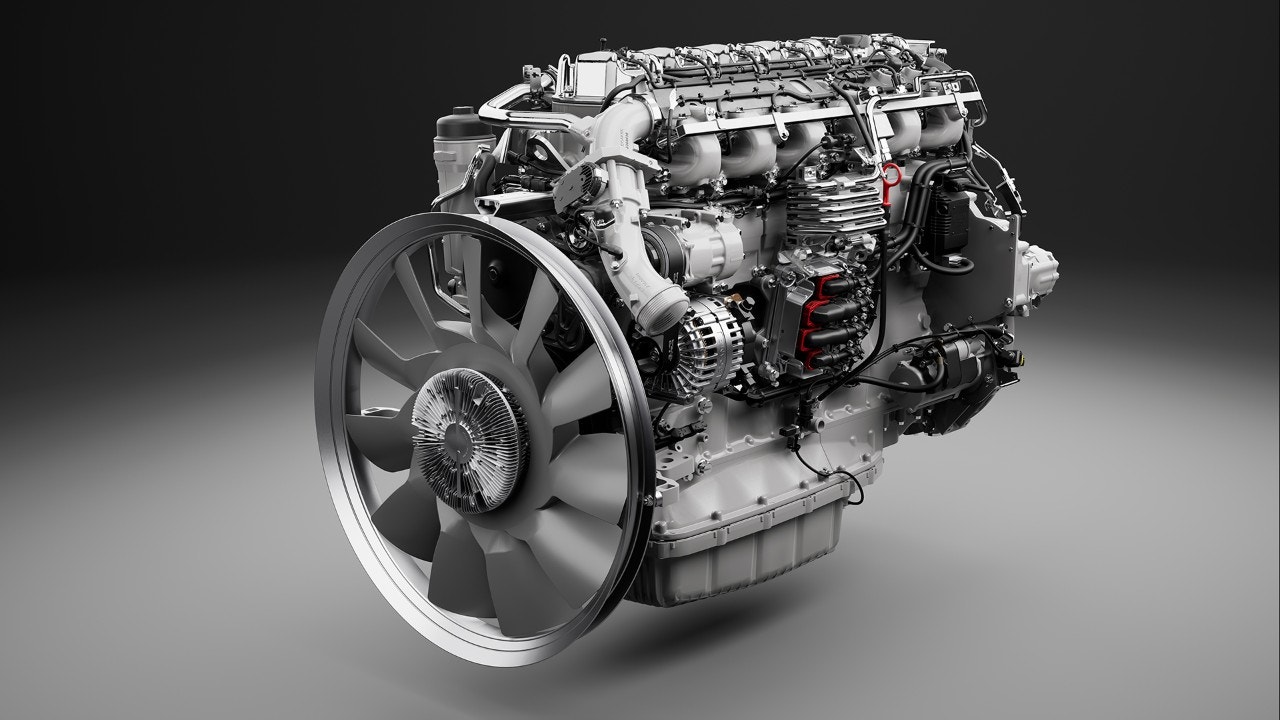
Scania's range of gas engines is an excellent way to switch to a sustainable and renewable alternative fuel for your operation, with lower emissions and less noise while still offering significant range.
 

For many transport providers this has meant a sustainable solution without compromise. However, for some, the maximum available engine power had been seen as a limitation. This has now been addressed with an update of the 13-litre biogas engine, where the previous 410 hp engine has been replaced with both a 420 hp and a 460 hp version.
 

Combined with other improvements in both specification options and energy efficiency, Scania's gas engine range now becomes an even more competent solution for more sustainable transport.


Our range of gas-powered trucks are highly adaptable with great driveability, low fuel consumption and a driving range up to 1800 km. Available with L/P/G/R/S-series cabs, they can be used for urban rigid operations, all the way through to long-distance haulage.

What's new?

We can divide the new features and benefits into three main points:

More power: The 420 and 460 hp engines provide a more powerful engine for even heavier transport, such as construction those with a high load capacity.

S-cab: The new 13-litre engines can now also be specified with the S-cab, providing Scania's best solution in comfort and style.

Fuel savings: By combining our biogas engine with components from the successful Super powertrain, overall energy efficiency is increased and our customers can expect a 5% reduction in fuel consumption compared to the previous gas engine generation.

Scania gas-powered truck

Engineering without compromise

Our gas-powered trucks strike the perfect balance between low emissions, power and range: the 13-litre gas engine with its full potential for long haulage, construction, and urban operation; and the smooth, quiet powerhouse that is the 9-litre. Together, they enable us to offer clean, low carbon and tailor-made fleet solutions. 

Empowered engines

Scania gas engines are known for their fuel efficiency, a typical semi­trailer tractor can achieve a driving range of approximately 1,800 kilometres. With biomethane in the tanks, the CO2 reduction is 50-90%, typically 80% from a well-to-wheel perspective compared to normal diesel. It is possible to specify our gas engines to meet strict noise regulations such as the PIEK-standard Quiet Truck in Europe.

5% more fuel efficient biomethane engines

Our updated 13-litre biomethane engines now offer more powerful engine options, and by coupling them with components from our Super-based powertrain, they are 5% more fuel efficient compared to our former generation. Features such as a lighter gearbox, reduced internal friction, and optimised axle gearing contribute to smoother and more efficient operations.

Heavy-​duty powertrain

Scania's gas trucks use 9-litre or 13-litre Otto-cycle engines which burn methane as fuel. The engines are available for compressed or liquefied gas, and you can choose a power band from 280 hp up to 460 hp depending on your operation.

Scania Gas Truck

Waste to fuel

Along with improved efficiency, sustainably produced renewable fuels are a key part of Scania’s approach to Driving the Shift and achieving fossil free transport.

FAQ about gas trucks

If you have any questions about gas trucks that are not covered in this FAQ – feel free to reach out to our customer service team, and we would be happy to help out in any way we can.


Scania has an ambitious electrification roadmap – our goal is for half of our annual sales to be battery electric vehicles (BEVs) by 2030. But this alone will not be enough to achieve the necessary reductions in greenhouse gas emissions in the transport sector. A wide range of solutions are needed to reduce greenhouse gas emissions, of which biomethane is one.
 

The long average lifespan of heavy-duty vehicles will require active replacement of fossil diesel and gas even in existing fleets – typically with sustainable HVO, biodiesel and biomethane. If we are to achieve a global halving of carbon dioxide emissions every decade, it is necessary to reduce real greenhouse gas emissions from source to wheel in line with the Paris Agreement.
 

A report from the Stockholm Environment Institute (SEI), "Accelerating to zero", shows that even if we as an industry reach the target of 50% new sales for BEVs by 2030, 90% of the rolling stock will still have conventional combustion engines. These will need to be powered by non-fossil fuels, such as biomethane, to a much greater extent than today, if we are to achieve the targets.

Methane is the main component of both biogas and natural gas, but with one crucial difference:
 

Natural gas is a fossil fuel. It is extracted from the ground just like oil.

Biogas is renewable. It is made from organic waste – such as food scraps, manure or sewage sludge – through digestion. 

Almost any type. Scania’s state-of-the-art gas engine – in both 9- and 13-litre versions – is suitable for most heavy-duty applications. Biomethane is simply one of the best ways to phase out fossil fuels for both trucks and buses commercially, with the highest possible CO2 reductions for a modest investment.
 

Our new Euro 6 gas engine range offers up to 5% higher fuel efficiency compared to the previous generation. Fuel tank options are also available for both compressed gas and liquefied gas, with a range similar to that of a diesel vehicle.

Biogas provides between 50-90% CO2 reduction compared to diesel, typically in the 80% range from a well-to-wheel perspective.

LNG stands for Liquefied Natural Gas. LBG stands for Liquefied Biogas. LNG/LBG is stored at very low temperatures in liquid form, offering a higher energy density and longer range — suitable for long-haul operations.
 

CNG stands for Compressed Natural Gas. CBG stands for Compressed Biogas. CNG/CBG is stored at high pressure, ideal for shorter and regional routes.
 

Liquefied gas may sound like a contradiction, but it is gas that has been cooled to a liquid state. The temperature is minus 130-160 °C, which means that liquefied vehicle gas causes frostbite if it comes into contact with the skin.

The decomposition of organic waste – manure, sewage, food waste – produces methane. Organic waste can therefore be diverted from landfills into a biomethane process.
 

In the first stage – the anaerobic digestion plant – the waste is collected and pre-treated, and the decomposition is accelerated by beneficial bacteria. The result is a mixture of 50-60% methane, and the rest is mostly CO2. This is what we call biomethane.
 

The biomethane is purified and refined, CO2 is separated and the result is at least 97 percent methane: a vehicle fuel that we call biomethane.
 

Not only do we avoid methane leakage from landfills by removing the waste, we also get valuable by-products. For example, biofertilizer from recycled phosphorus and nitrogen, and CO2 is captured for food or industrial use. All by-products are collected to contribute to both business benefit and CO2 reduction.
 

But existing landfills will still be around for many years, leaking methane. This methane can also be captured and converted into either cooking gas – replacing wood or charcoal – or electricity via a generator. An important contribution to climate change mitigation and adaptation.
 

Because CO2 reduction occurs in multiple parts of the entire system, this unique circular system can provide a CO2 reduction of over 100%. 

Almost everything organic, such as:
 

Sewage

• Sludge from sewage treatment plants
 

Organic solid waste from:

• Slaughterhouses/slaughterhouses

• Plantations/sugar cane

• Agriculture

• Fisheries

• Food production

• Breweries/wineries

• Animal husbandry/fertilizer

• Forestry

• Food markets
 

Landfills

• Landfill gas

Biomethane is truly a unique circular tool – a real Swiss Army knife that provides many advantages at the same time:
 

  •  It is an important tool for phasing out fossil fuels for heavy trucks
  •  It creates local energy security and new jobs
  •  It returns nutrients to the soil, replacing fossil fertilizers
  •  It improves air and water quality
  •  It solves the waste problem and eliminates landfills
  •  It enables very large CO2 reductions – at low cost. Most CO2 reduction in relation to money spent. In fact, it may even have negative emissions from a system perspective


This means that biomethane systems contribute to almost all of the UN's Sustainable Development Goals. 

Contact us

Contact us in the way that suits you, please choose your option below: 

Configure your own

With a wealth of choices and an array of modular configurations, you can tailor your truck to fit your trucking life. Make it a Scania.

Find your nearest branch

Reach out to our authorized dealers for any inquiries regarding our products, services, or activities in your area.